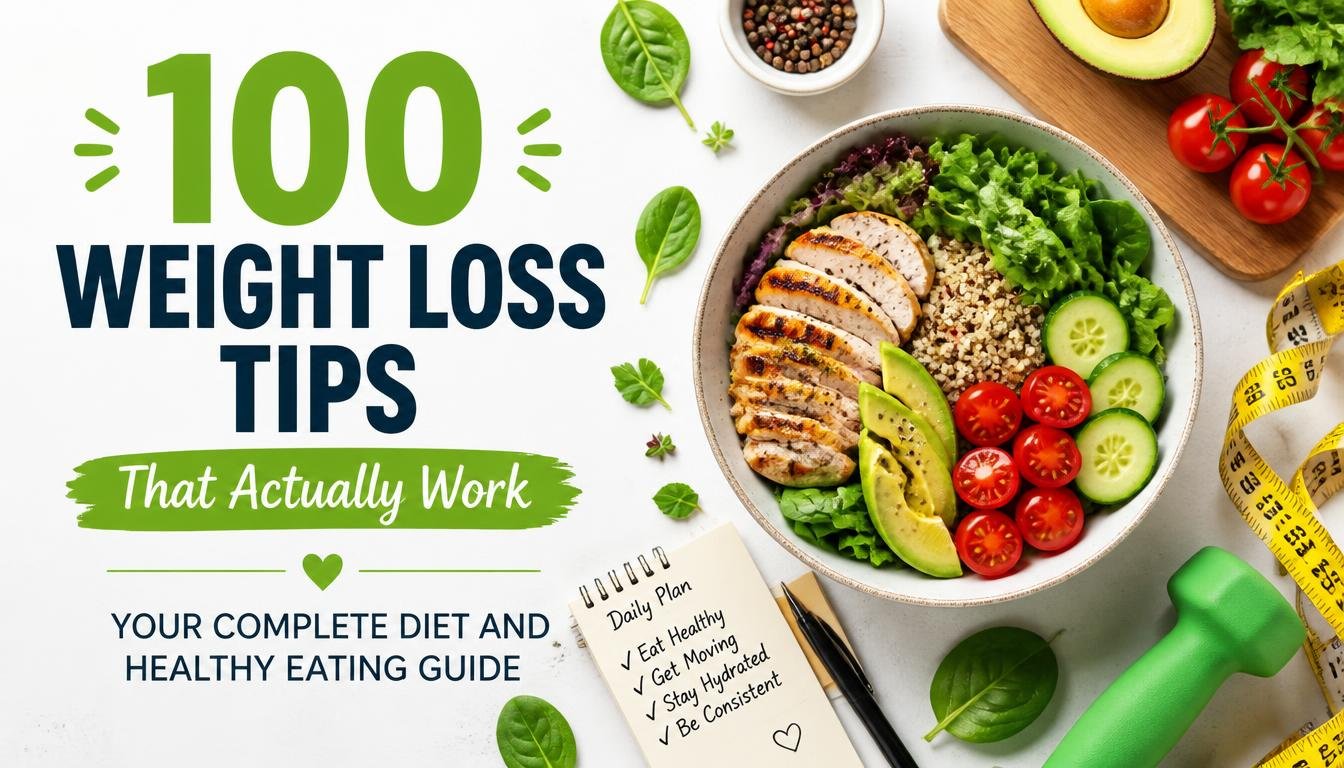
100 Weight Loss Tips That Actually Work: Your Complete Diet and Healthy Eating Guide
100 Weight Loss Tips That Actually Work | Complete Diet Guide for Healthy Weight Loss
Discover 100 practical weight loss tips to lose weight naturally. Learn healthy eating habits, portion control, meal planning, grocery shopping, calorie reduction, and lifestyle changes for sustainable weight loss.
100 Weight Loss Tips That Actually Work: Your Complete Diet and Healthy Eating Guide
Losing weight is not about following crash diets or starving yourself. Long-term weight loss comes from building healthy eating habits, making smarter food choices, controlling portions, and staying physically active. Many popular diets promise quick results, but they are often difficult to maintain and may not provide balanced nutrition.
The tips in this guide focus on practical lifestyle changes rather than temporary solutions. They cover healthy grocery shopping, meal planning, cooking methods, portion control, restaurant eating, healthy snacks, and simple ways to reduce daily calorie intake. Small improvements practised consistently often produce better long-term results than extreme dieting. This article is based on the source material while reorganising it into a clearer, SEO-friendly format.
Why Crash Diets Usually Fail
Many people begin their weight loss journey by following restrictive or trendy diets. While these approaches may produce short-term weight loss, they are often difficult to maintain.
Instead of following unbalanced eating plans, focus on developing lifelong healthy habits.
Healthy weight loss should include:
• Balanced nutrition
• Regular physical activity
• Portion control
• Adequate hydration
• Quality sleep
• Consistent meal planning
Benefits of Healthy Weight Loss
Healthy weight management can help:
• Improve heart health
• Reduce body fat
• Increase energy levels
• Improve digestion
• Support healthy blood sugar levels
• Lower the risk of obesity-related diseases
• Improve confidence and overall well-being
1. Build Healthy Eating Habits
Healthy eating begins with everyday choices.
Avoid fad diets
Extreme low-calorie diets, highly restrictive eating plans, and unbalanced diets are usually difficult to maintain over time. Instead, learn how different foods affect your body and choose a balanced eating pattern.
Never skip breakfast
Breakfast helps provide energy for the day. Skipping breakfast often leads to overeating later and poor food choices.
Don’t skip meals
Regular meals help prevent excessive hunger and reduce the temptation to overeat. Waiting too long between meals often leads to larger portions at the next meal.
Eat slowly
Your brain needs time to recognise fullness. Eating slowly helps you enjoy your meal and may reduce total calorie intake.
Avoid distracted eating
Watching television or using mobile devices while eating often causes people to consume more food without realising it.
2. Make Smarter Grocery Choices
Shopping habits have a major impact on your diet.
Follow these simple strategies:
• Shop with a grocery list.
• Avoid shopping when hungry.
• Buy groceries once a week.
• Spend more time in the fruit and vegetable section.
• Visit local farmers’ markets for fresh produce when possible.
• Reduce impulse purchases.
These simple habits make it easier to maintain a healthy diet throughout the week.
3. Choose Healthier Foods
Replacing high-calorie foods with healthier alternatives helps reduce calorie intake without feeling deprived.
Better food choices include:
• Whole grains instead of refined grains
• Fresh fruits instead of sugary desserts
• Vegetables at every meal
• Fish more often
• Beans and legumes
• Low-fat dairy products
• Lean poultry
• Nuts in moderate portions
• Homemade meals instead of processed foods
The source also recommends replacing cream-based sauces with tomato-based sauces, reducing fried foods, and trimming visible fat from meat before cooking.
4. Reduce Calories Without Feeling Hungry
Small changes can significantly lower calorie intake.
Examples include:
• Replace butter with fruit puree in baking.
• Switch from whole milk to skim or low-fat milk.
• Use low-fat salad dressings.
• Steam vegetables instead of boiling or frying.
• Drink water instead of soft drinks.
• Replace cream sauces with tomato sauces.
• Choose baked potatoes instead of French fries.
• Limit pastries and sugary desserts.
These substitutions reduce calories while maintaining nutrition.
5. Control Portion Sizes
Portion control is one of the simplest ways to reduce calorie intake.
Helpful strategies include:
• Use smaller plates.
• Measure serving sizes until you learn proper portions.
• Reduce oversized meal portions.
• Avoid second helpings.
• Package half of large restaurant meals to take home.
Over time, portion awareness becomes a natural habit.
6. Healthy Snack Ideas
Snacking does not have to interfere with weight loss.
Choose foods such as:
• Fresh fruit
• Raisins
• Mixed nuts
• Yogurt
• Fresh vegetables
• Roasted almonds
• Homemade baked potato chips
Healthy snacks help reduce hunger between meals and support better food choices later in the day.
7. Eat More Fruits and Vegetables
Fruits and vegetables are naturally rich in vitamins, minerals, antioxidants, and dietary fibre. They help you stay full for longer while adding fewer calories to your meals.
Healthy Tips
• Eat a variety of colourful vegetables every day.
• Include seasonal fruits as snacks.
• Steam vegetables instead of boiling them to help retain more nutrients.
• Add vegetables to soups, casseroles, salads, and sandwiches.
• Rotate different vegetables throughout the week to avoid boredom.
The source encourages increasing vegetable intake and preparing them with healthier cooking methods instead of frying.
8. Choose Better Protein Sources
Protein helps maintain muscle mass and promotes satiety.
Choose healthier protein options such as:
• Fish
• Skinless chicken
• Turkey
• Beans
• Lentils
• Yogurt
• Eggs in moderation
• Lean cuts of meat
The original article also recommends trimming visible fat from meat before cooking and eating fish more often without breading or deep frying.
9. Make Salads More Interesting
Many people stop eating salads because they become repetitive. The solution is variety.
Try adding:
• Mixed leafy greens
• Tomatoes
• Cucumbers
• Bell peppers
• Beans
• Chickpeas
• Raisins
• Fresh herbs
• Chopped nuts
Instead of heavy mayonnaise or cream-based dressings, use:
• Lemon juice
• Olive oil in small amounts
• Herbs
• Vinegar
• Low-fat yoghurt dressings
The source suggests replacing mayonnaise with yoghurt in several recipes to lower fat content.
10. Healthy Cooking Methods
How you cook your food matters almost as much as what you eat.
Healthier cooking techniques include:
• Baking
• Grilling
• Broiling
• Steaming
• Stir-frying with minimal oil
• Roasting
Avoid frequent deep frying whenever possible.
These methods reduce unnecessary calories while preserving flavour and nutrients.
11. Smart Grocery Shopping Habits
Successful weight loss begins before you enter the kitchen.
Plan Your Meals
Create a weekly meal plan before shopping.
Buy Only What You Need
Shopping from a prepared list reduces impulse purchases.
Read Nutrition Labels
Compare products by checking:
• Calories
• Fat
• Sugar
• Carbohydrates
The source emphasises reading labels and avoiding processed foods whenever possible.
12. Healthy Eating at Restaurants
Eating out does not have to ruin your weight loss efforts.
Before You Go
• Avoid arriving extremely hungry.
• Review the menu ahead of time if available.
• Decide on healthier choices before ordering.
While Ordering
Choose:
• Grilled chicken
• Grilled fish
• Baked dishes
• Tomato-based sauces
• Vegetable sides
Request:
• Dressing on the side
• Sauce served separately
• Steamed vegetables instead of fries
• Half portions when available
The original article also recommends asking restaurants to prepare foods without frying whenever possible.
13. Healthy Buffet Strategies
Buffets often encourage overeating.
Use these simple techniques:
• Walk through the buffet before filling your plate.
• Fill half your plate with vegetables.
• Choose broth-based soups.
• Select grilled meats instead of fried foods.
• Sit farther from the buffet.
• Visit the buffet only once.
These habits help reduce unnecessary calories without eliminating enjoyment.
14. Fast Food Tips
Fast food should not become a daily habit.
When eating at fast-food restaurants:
Choose:
• Salads
• Grilled chicken
• Fruit options
• Yogurt
• Smaller portions
Avoid:
• Fried chicken
• Large fries
• Creamy sauces
• Sugary soft drinks
The original article also lists examples of lower-calorie menu choices at selected restaurant chains available at the time it was written. These examples should be checked against current restaurant menus because offerings may change.
15. Eat Mindfully
Mindful eating improves satisfaction while reducing overeating.
Practice these habits:
• Sit down while eating.
• Chew food thoroughly.
• Taste every bite.
• Avoid multitasking during meals.
• Stop eating when comfortably satisfied.
Eating slowly gives your body time to recognise fullness, making portion control easier.
16. Keep a Food Diary
Recording what you eat helps identify habits that may be slowing your progress.
Your food journal may include:
• Meal times
• Portion sizes
• Snacks
• Drinks
• Hunger levels
• Emotional triggers
The source identifies keeping a food diary as one of the first steps toward developing healthier eating habits.
17. Healthy Dairy Choices
Choose lower-fat dairy products whenever possible.
Better options include:
• Skim milk
• Low-fat milk
• Plain yoghurt
• Low-fat yogurt
• Cottage cheese
The source also discusses replacing sour cream with plain low-fat yoghurt and using evaporated skim milk in soups and sauces.
18. Small Changes Produce Big Results
Long-term weight loss rarely comes from one major change.
Instead, combine many small improvements such as:
• Drinking more water
• Eating more vegetables
• Reducing sugary drinks
• Walking daily
• Choosing healthier cooking methods
• Controlling portion sizes
• Planning meals
• Reading food labels
Over time, these habits become part of a sustainable, healthy lifestyle rather than a temporary diet.
19. Healthy Food Swaps for Weight Loss
Making simple substitutions is one of the easiest ways to reduce calories without sacrificing flavour.
Better Choices
Instead of → Choose
• Whole milk → Skim or low-fat milk
• Butter → Fruit puree or applesauce in baking
• Cream sauce → Tomato-based sauce
• Sour cream → Plain low-fat yogurt
• White bread → Whole grain bread
• Fried potatoes → Baked potatoes
• Fried fish → Grilled or baked fish
• Sugary drinks → Water
• Creamy salad dressing → Lemon juice or low-fat dressing
• Deep frying → Baking, steaming, grilling, or broiling
Small changes made consistently can significantly reduce your overall calorie intake.
20. Foods to Limit
The original article recommends reducing foods that are high in calories, saturated fat, sugar, or heavily processed.
Examples include:
• Fried foods
• Pastries
• Doughnuts
• Sugary soft drinks
• Cream-based sauces
• Full-fat salad dressings
• Fast food
• Highly processed foods
• Large restaurant portions
Limiting these foods makes room for healthier choices that provide more nutrients with fewer calories.
21. Build a Healthy Daily Routine
A consistent routine supports long-term weight management.
Morning
• Eat a healthy breakfast.
• Drink water.
• Include a source of protein.
Midday
• Eat balanced meals.
• Add vegetables to lunch.
• Stay hydrated.
Evening
• Choose lighter meals.
• Avoid unnecessary snacking.
• Stop eating when comfortably full.
Following a regular eating schedule can help reduce overeating and improve meal planning.
22. Weight Loss Mistakes to Avoid
Many people unknowingly slow their progress by repeating common mistakes.
Avoid these habits:
• Skipping meals
• Shopping while hungry
• Eating while watching television
• Ignoring portion sizes
• Frequent fast-food meals
• Eating too quickly
• Choosing processed foods over fresh foods
• Drinking sugary beverages regularly
The source highlights these habits as common obstacles to healthier eating.
23. Long-Term Weight Loss Success
Successful weight management is based on consistency rather than perfection.
Focus on:
• Healthy eating habits
• Regular physical activity
• Meal planning
• Portion awareness
• Reading nutrition labels
• Preparing meals at home
• Choosing fresh ingredients
• Making gradual improvements
These lifestyle habits are easier to maintain than restrictive diets and support long-term health.
Key Takeaways
Remember these important principles:
• Avoid fad diets.
• Plan your meals.
• Shop with a grocery list.
• Eat plenty of vegetables and fruits.
• Choose lean protein.
• Drink water instead of sugary beverages.
• Read food labels.
• Control portion sizes.
• Eat slowly.
• Keep a food diary.
• Cook at home more often.
• Limit fried and processed foods.
• Stay consistent.
Conclusion
Healthy weight loss is a journey, not a quick fix. Sustainable results come from making better food choices, controlling portions, preparing meals wisely, staying active, and maintaining healthy habits every day. Rather than searching for miracle diets, focus on balanced nutrition and realistic lifestyle changes that you can continue for years.
The 100 tips presented in this guide demonstrate that successful weight management is often achieved through many small improvements rather than one dramatic change. Every healthy decision, whether choosing water over soft drinks, eating more vegetables, reading nutrition labels, or slowing down during meals, contributes to better overall health and lasting weight control.
Frequently Asked Questions (FAQs)
1. What is the healthiest way to lose weight?
The source emphasises building healthy eating habits instead of following fad diets. Long-term lifestyle changes are more sustainable than restrictive eating plans.
2. Should I skip breakfast to lose weight?
No. The source recommends eating breakfast because skipping it may increase hunger later in the day and lead to overeating.
3. Why is portion control important?
Smaller portions help reduce calorie intake without eliminating entire food groups. Using smaller plates and learning appropriate serving sizes are practical strategies mentioned in the source.
4. Is water better than soft drinks?
Yes. The article recommends replacing soft drinks with water to lower calorie intake.
5. Are vegetables helpful for weight loss?
Yes. Vegetables are encouraged because they provide nutrients and fibre while generally containing fewer calories than many processed foods.
6. Should I avoid processed foods?
The source advises limiting processed foods whenever possible and choosing fresh ingredients instead.
7. Is eating slowly beneficial?
Yes. Eating slowly allows your body more time to recognise fullness and may help reduce overeating.
8. How can I make healthier restaurant choices?
Choose grilled, baked, broiled, or steamed foods, request dressings on the side, and control portion sizes. These strategies are recommended throughout the source article.
9. Why should I keep a food diary?
A food diary helps identify eating patterns and supports healthier lifestyle changes. The source describes it as an important first step toward improved eating habits.
10. What is the most important lesson from these 100 tips?
There is no single secret to successful weight loss. Consistent healthy habits, smart food choices, and balanced nutrition form the foundation of lasting weight management.
Medical Disclaimer
This article is intended for educational and informational purposes only. It is not a substitute for professional medical advice, diagnosis, or treatment. Always consult a qualified healthcare professional before making significant changes to your diet, exercise routine, or weight management plan, especially if you have a medical condition or take prescription medications.
https://optimalhealth24.com/10-daily-habits-healthier-calmer-resilient/